
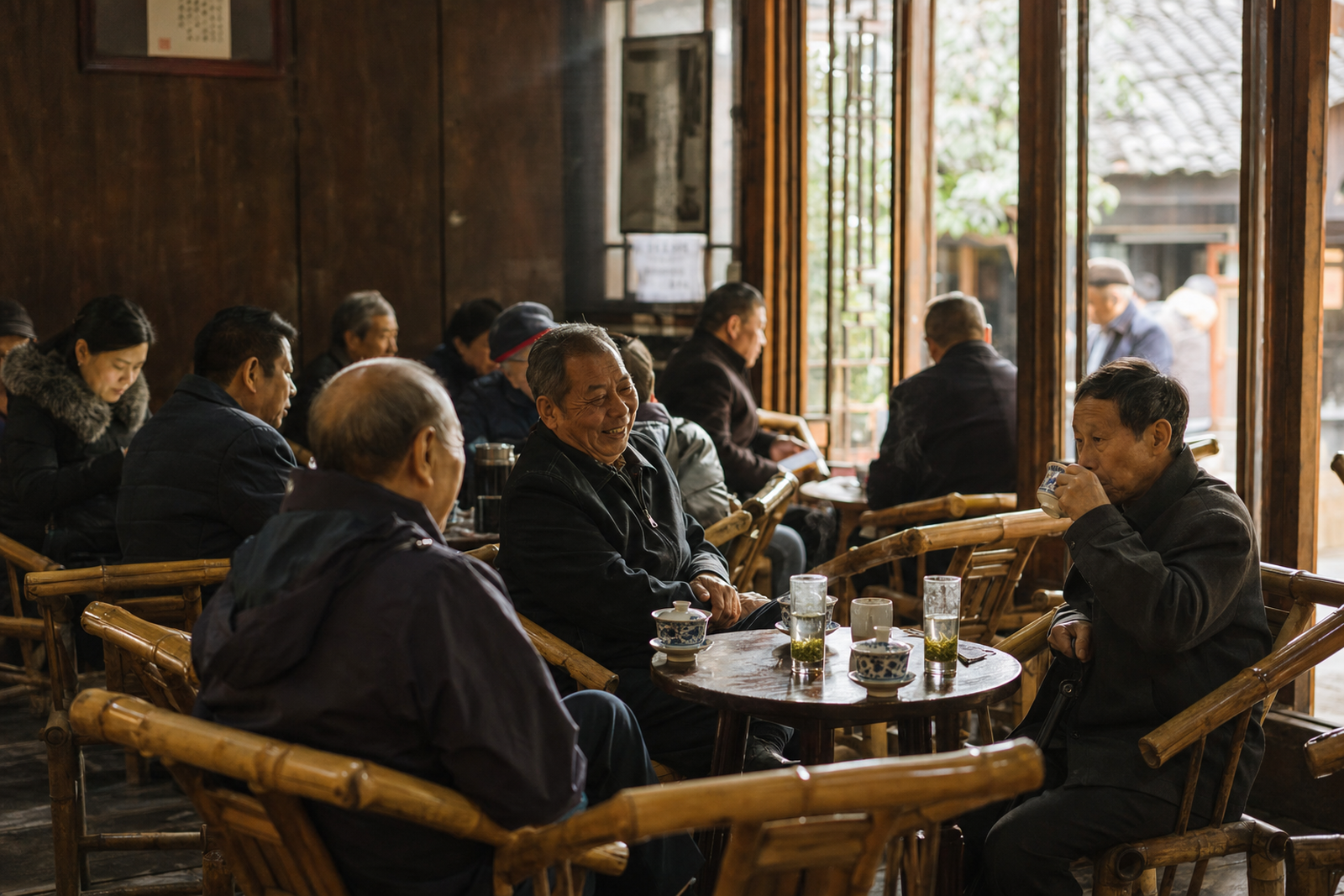
Photo credit: Discover Real China (discover-real-china.com)
Best AI Tools for Tea House Owners (2026 Guide)
Finding the best AI tools for tea house owners is not about turning your shop into a technology showcase. It is about something much more practical: getting the hours you currently spend on menus, social media, emails, and scheduling back, so you can spend them on the tea itself and the people who come to drink it. Tea houses run on thin margins and repeat customers. The owners who thrive in 2026 are the ones who let AI handle the repetitive work while they protect the experience that makes a tea house different from a coffee chain.
This guide walks through the AI tools that genuinely work for small tea houses: writing help, marketing, customer communication, inventory, and scheduling. No enterprise software, no hype, and nothing that requires a technical background. Every tool here was chosen because a real tea house owner with a small budget can set it up and see a benefit within days.
Why Tea Houses Need AI More Than Most Small Businesses
A tea house is a peculiar business. You might carry forty or fifty different teas, each with its own origin story, brewing temperature, and steeping time. Customers ask detailed questions: what is the difference between first flush and second flush Darjeeling, why does the oolong taste roasted, which tea helps with an afternoon slump? At the same time, you are running a retail business with all the usual overhead: social media that never posts itself, a website that needs updating, holiday hours that need communicating, and a seasonal menu that changes with the weather.
Most tea house owners are generalists. You are the buyer, the brewer, the marketer, the accountant, and the cleaner. AI tools cannot brew tea for you, but they can take over the writing, planning, and customer communication tasks that eat two to three hours a day. That is the equivalent of hiring a part-time assistant for a fraction of the cost.
The 7 Best AI Tools for Tea House Owners
1. ChatGPT or Claude — Your Menu Writer and Marketing Assistant
The single most useful of the best AI tools for tea house owners is a good AI writing assistant. ChatGPT (free or Plus) and Claude (free or Pro) can draft product descriptions for new teas, write Instagram captions, compose email newsletters, and help you answer customer questions for your website's FAQ page. The trick is to give the AI your raw notes first. You taste the tea and jot down three or four bullet points: roasted aroma, honey finish, brews five steeps. The AI turns those bullets into a polished 80-word tasting note. Your palate stays in charge; the AI just does the typing.
Practical uses include seasonal menu descriptions, brewing guide cards for the tables, responses to common customer emails, and scripts for staff training on new tea arrivals. The free versions are genuinely enough for most small tea houses.
2. Canva Magic Studio — Seasonal Menus, Signage, and Social Graphics
Tea houses live and die by presentation. A winter menu board, a Lunar New Year poster, an Instagram story announcing a new matcha arrival: Canva's AI features (Magic Write, Magic Design) let you produce these in minutes without hiring a designer. Upload a photo of your shop or your tea, pick a template, and let the AI adapt the layout and copy. The free version covers most needs; Canva Pro adds background removal and brand fonts for a more polished look.
Tip from experience: photograph your teas and teaware once, in good natural light, and reuse those photos across every design. Consistent imagery builds a recognizable brand, which matters far more than fancy effects.
3. Square AI Features — Forecasting and Smarter Sales
If you already take payments through Square, you already own an AI tool. Square's analytics can forecast busy and slow periods, track which teas sell best by season, and flag inventory that is not moving. Tea houses tie up a surprising amount of cash in inventory — premium loose-leaf teas, teaware, packaged gifts — so knowing that your white tea sells three times faster in spring than winter helps you order smarter. The Square POS free tier includes basic analytics; paid tiers add deeper reporting and marketing features.
Pair this insight with our guide on how to use AI for inventory management for a fuller picture of keeping stock costs under control.
4. Tidio or ManyChat — A Chatbot That Answers Tea Questions
Customers message tea houses with the same questions over and over: what are your hours, do you sell online, which tea is caffeine-free, do you host tastings? An AI chatbot on your website or Facebook page answers these instantly, day or night, and takes online orders or tasting-event bookings while you are busy brewing. Tidio offers a solid free tier; ManyChat is strong if most of your customers find you through Instagram or Facebook. Set the bot to hand off tricky questions to a human — a customer asking about a tea allergy deserves a real person, not a script.
For more on choosing the right conversational tool, see our roundup of the best AI chatbots for small restaurants, which covers the same principles for food and drink businesses.
5. Mailchimp with AI — Newsletters Your Tea Club Actually Opens
Repeat customers are a tea house's lifeblood, and email is still the cheapest way to reach them. Mailchimp's AI features help with subject lines, send-time optimization, and content suggestions. A simple monthly newsletter — new arrivals, a brewing tip, a tasting event date — keeps your shop in customers' minds. Start with a signup sheet at the counter and the free Mailchimp tier, which is enough for a small list. The AI subject-line assistant alone can lift open rates noticeably.
6. Buffer or Later — Social Media That Runs Itself
Tea is visual: steam rising from a gaiwan, the color of a first infusion, a shelf of colorful tins. But posting consistently is hard when you are running the shop. Buffer and Later let you batch-create a week's posts in one sitting and use AI to suggest captions, hashtags, and best posting times. Spend one hour on Monday morning scheduling the week, and your Instagram stays active even on your busiest days. Both offer free tiers that are adequate for a single-location tea house.
If social media marketing feels overwhelming, our guide on how to use AI for small business social media walks through the same workflow in more detail.
7. 7shifts — AI Scheduling for Your Small Team
If your tea house has even three or four staff, scheduling is a weekly headache. 7shifts uses AI to build schedules around availability, labor costs, and predicted demand, and handles shift swaps through an app. The free tier covers a single location. Fewer scheduling errors mean fewer short-staffed rush hours and lower labor costs — two things every tea house owner cares about.
Choosing the Right Stack for Your Tea House Size
Not every tea house needs every tool. A solo owner-operator running a small tasting room gets 90% of the value from just three: an AI writing assistant, Canva, and a booking-capable chatbot for tasting events. Add Square analytics once inventory spending grows. A tea house with a small team and a retail shelf should add 7shifts for scheduling and Mailchimp for the customer list, because staff coordination and repeat marketing are where the hours go at that size. A tea house with an online store as well as a physical shop is the one case where the paid tiers start to make sense early — product descriptions, email automation, and chatbot support for shipping questions scale directly with order volume. Match the tools to your actual bottlenecks rather than adopting everything at once.
Comparison Table: Best AI Tools for Tea House Owners
| Tool | Main Job | Best For | Starting Price |
|---|---|---|---|
| ChatGPT / Claude | Menu copy, captions, emails, FAQs | All the writing your shop needs | Free; Plus/Pro ~$20/mo |
| Canva Magic Studio | Menus, posters, social graphics | Visual design without a designer | Free; Pro ~$15/mo |
| Square | POS, sales forecasting, inventory | Understanding what actually sells | Free POS; paid tiers vary |
| Tidio / ManyChat | 24/7 customer chat, bookings | Answering repeat questions automatically | Free tiers available |
| Mailchimp | Email newsletters | Keeping repeat customers coming back | Free up to list limits |
| Buffer / Later | Social media scheduling | Staying active online without daily effort | Free tiers available |
| 7shifts | Staff scheduling | Shops with 3+ employees | Free for one location |
What Does AI Actually Cost a Small Tea House?
Here is an honest budget breakdown. The free stack — ChatGPT free, Canva free, Square free POS, Tidio free, Mailchimp free, Buffer free — costs exactly zero per month and covers everything a new tea house needs. As revenue grows, the natural upgrades are ChatGPT Plus or Claude Pro (~$20/month) for heavier writing work, Canva Pro (~$15/month) for brand consistency, and a paid scheduling or email tier. Most established tea houses end up spending $35–$60 a month on AI tools total. Compare that with a single part-time marketing hire and the math is obvious.
Start free. Add paid tiers only when a specific tool is saving you enough hours to justify its price. That discipline keeps AI a profit center instead of another subscription pile.
A Simple Weekly AI Routine for Tea House Owners
Tools only help if they become habits. Here is a weekly routine that takes about two hours total:
- Monday (30 min): Use ChatGPT to draft the week's social captions and one newsletter section; schedule everything in Buffer.
- Wednesday (30 min): Review Square's sales data; use the AI assistant to draft descriptions for any new tea arrivals.
- Friday (30 min): Update the chatbot's answers with any new seasonal questions; design the weekend's promotional graphic in Canva.
- Sunday (30 min): Build next week's staff schedule in 7shifts; check Mailchimp's send-time suggestion for the monthly newsletter.
Two hours a week buys you a marketing operation that looks like you hired someone. The rest of your time goes back to the tea.
Mistakes to Avoid When Using AI in Your Tea House
Do not let AI invent tasting notes. If the AI writes that your Dragon Well has "notes of dark chocolate and sea mist" and it does not, customers will notice and trust erodes. Always feed the AI your real tasting notes and edit the output. Do not make health claims. AI-generated copy sometimes drifts into promising that a tea "boosts immunity" or "detoxes" — claims that can create legal problems. Keep health language factual and modest. Do not fully automate customer care. A chatbot is fine for hours and directions, but a complaint or an allergy question should reach a human fast. Finally, do not skip the personal touch. The reason people visit tea houses instead of ordering online is the human experience. AI should free up your time for it, not replace it.
AI and Google Reviews: Your Silent Marketing Channel
One more place AI quietly helps: responding to Google reviews. A tea house that replies to every review — thanking happy customers, addressing unhappy ones professionally — ranks better in local search and converts more searchers into visitors. Use ChatGPT to draft reply templates in your own voice, then personalize each one. It takes five minutes a day and compounds over months. Our guide to AI review response tools for restaurants covers the same techniques in depth, and they apply directly to tea houses.
Frequently Asked Questions
What is the best free AI tool for a tea house owner just starting out?
ChatGPT's free tier. Writing is the biggest time sink for most tea house owners — menu descriptions, social captions, email replies — and a free AI writing assistant handles all of it. Pair it with free Canva for visuals and you have a complete marketing setup at zero cost.
Can AI help a tea house sell more tea online?
Yes, in two ways. First, AI-generated product descriptions and brewing guides make your online listings more convincing. Second, a chatbot can answer buying questions and take orders around the clock. Many tea houses report that simply adding clear brewing instructions to product pages — drafted with AI help — reduces customer hesitation and returns.
Do I need technical skills to use these AI tools for my tea house?
No. Every tool listed here is designed for non-technical users: you type or click, and the AI does the work. If you can use email and Instagram, you can use these tools. Most offer free tiers specifically so small businesses can try them without commitment.
How do I keep AI-written content authentic to my tea house's voice?
Feed the AI examples of your own writing first — a few of your existing descriptions or captions — and ask it to match that tone. Always edit the output before publishing. Think of AI as a fast first draft, not a final author. Your knowledge of tea is the ingredient no AI can replace.
Is it worth paying for AI tools, or is the free tier enough?
Start with free tiers; they cover most needs for a single-location tea house. Upgrade when a specific tool is clearly saving you several hours a month. The most common first paid upgrade is ChatGPT Plus or Claude Pro (~$20/month) for heavier writing and research work.
How long does it take to set up AI tools for a tea house?
Most owners get the basics running in a weekend. An AI writing assistant works immediately, Canva takes an hour to learn, and a chatbot can be configured with your ten most common questions in an afternoon. Booking platforms and scheduling tools take a little longer because you enter your real services and staff details, but none of them require technical skills.
Conclusion
The best AI tools for tea house owners share one trait: they give you your time back. ChatGPT handles the writing, Canva handles the visuals, Square watches your numbers, a chatbot answers the repeat questions, and scheduling tools keep your team organized. None of them requires technical skill, and the free stack costs nothing to start. The tea house business will always be about the tea and the people in the room. AI simply clears the desk so you can focus on both. Start with one tool this week — the writing assistant is the easiest win — and add the rest as they prove their worth.
Running a drink-focused small business? See also our guides to AI tools for small cafe owners and AI tools for food truck owners for more ideas that transfer directly to tea houses.For late-night venue ideas, see our guide to AI marketing for shisha lounges. Membership businesses have their own playbook — see our guide to AI tools for gym owners.