
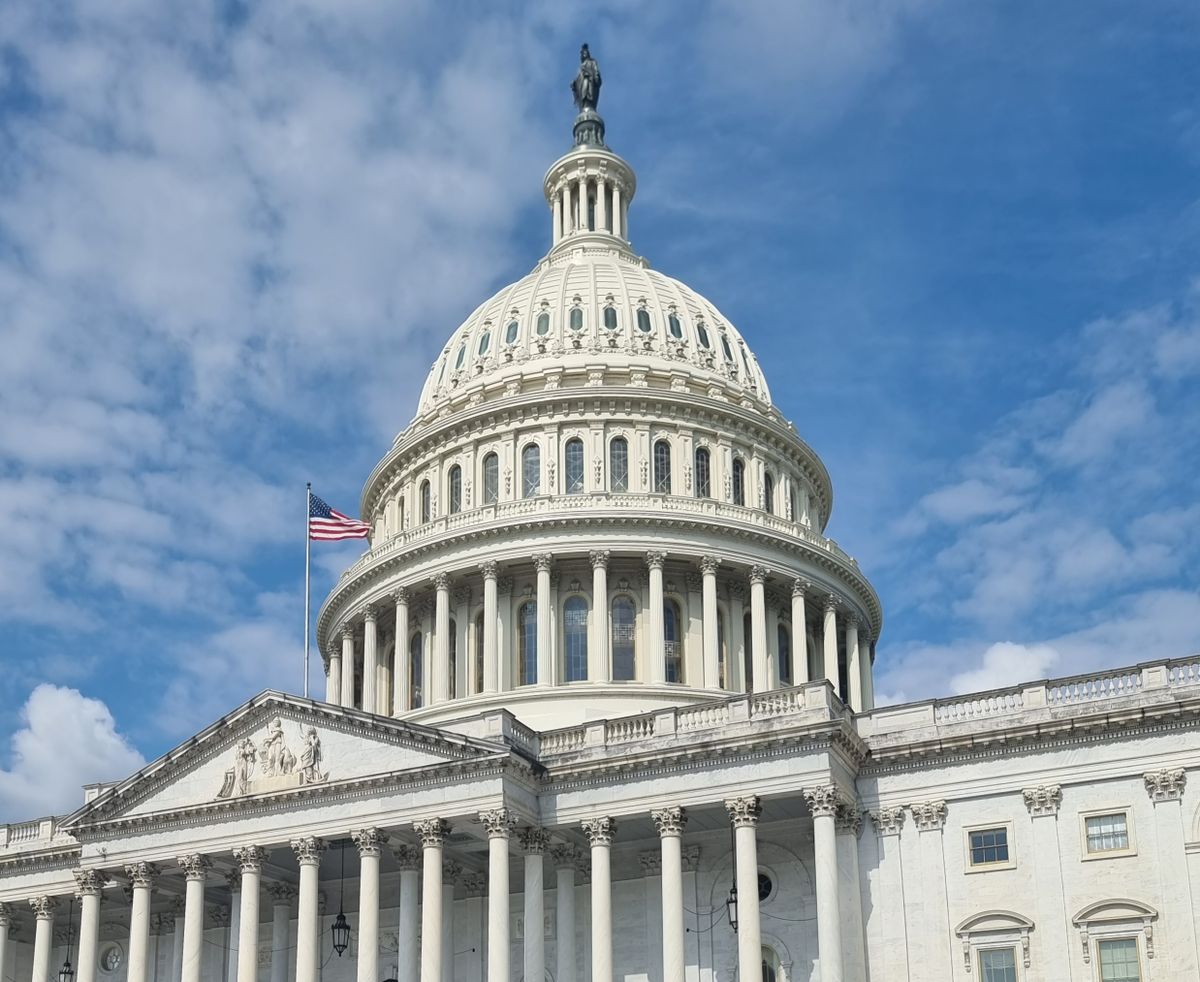
Photo credit: Pexels
By Kashan Ajmeri | Last updated: 3 November 2026
Most AI fellowships want you to build something. This one wants you to think about what the law should say when the thing you built goes wrong. That is a rarer offer than it sounds — and it pays $2,000 a week.
The Institute for Law & AI (LawAI) is accepting applications for its Summer Fellowship (US) 2027, a ten-week paid programme in Washington, DC, running from 14 June to 20 August 2027. Fellows work one-to-one with a mentor on a project of their own shaping — a report, a law review article, or legal research behind LawAI's advisory work with policymakers. Applications close at 11:59 pm ET on 29 January 2027, and late applications will not be assessed.
If you are a law student, a practising lawyer, or an academic wondering whether AI policy is a real career path or just a conference circuit, this fellowship is the honest way to find out. You spend a summer inside it, paid, mentored, and in the same city where the rules are actually written.
At a glance
| Fellowship | Institute for Law & AI Summer Fellowship (US) 2027 |
| Host | Institute for Law & AI (LawAI), Washington, DC |
| Duration | 10 weeks, 14 June – 20 August 2027 (full-time) |
| Location | Washington, DC, in person (remote considered case-by-case) |
| Weekly subsidy | $2,000 per week (higher for exceptional experience) |
| Relocation stipend | $10,000 one-time, for fellows who relocate to DC |
| Convening Week | 21–25 June 2027 in Washington, DC — travel covered |
| Who can apply | Law students, professionals and academics |
| Application fee | None — the application is a free form, about 20 minutes |
| Deadline | 11:59 pm ET, 29 January 2027 |
| Decision | By mid-March 2027 |
What the fellowship actually is
LawAI is an independent think tank that researches the legal challenges posed by artificial intelligence and advises governments, international organisations and private actors on them. Its stated belief is simple: sound legal analysis will promote security, welfare and the rule of law as AI advances. The summer fellowship is how it brings new people into that work.
As a fellow, you collaborate with a mentor to develop and run a project matched to your experience, skills and interests. Some fellows take on one extended piece of work — drafting a report or authoring a law review article. Others contribute across several initiatives, doing the legal research that supports LawAI staff's advisory projects. Fellows may also help advise policymakers, government bodies and private-sector organisations directly.
Here is the part worth paying attention to: fellows get real discretion over the form their output takes. A law review article or a policy brief — your call, decided with your mentor. Topic selection is agreed together, and projects must align with LawAI's mission of ensuring that major AI advances promote safety, security and the rule of law. LawAI publishes a workstream document on United States law and policy research directions, and reading it before applying is not optional in spirit — it tells you exactly what kind of questions the institute cares about.
Previous summer fellows have gone on to law and policy roles at the US Department of Commerce, leading AI companies, academia and think tanks, including LawAI itself. That is not a guarantee, obviously. But it is a better track record than most summer programmes can show.
What you get paid — and what it adds up to
The money is straightforward, which is refreshing. Every fellow receives a weekly subsidy of $2,000. Candidates with exceptional experience or qualifications may be eligible for a higher subsidy. Fellows who relocate to Washington, DC, receive a one-time $10,000 relocation and housing stipend — treated as taxable income, with no receipts or reimbursement paperwork required.
Do the arithmetic: ten weeks at $2,000 a week is $20,000, plus $10,000 if you relocate, which comes to $30,000 for the summer. On top of that, the Convening Week in Washington, DC (21–25 June 2027) has eligible travel expenses covered — flights, accommodation and meals.
Beyond the money, fellows get close mentorship from LawAI's research staff and affiliates, Q&A sessions with leading experts, US law and policy networking opportunities, career planning resources, and a look at future collaborations — follow-on grant funding, event invitations and potential projects or job openings with LawAI.
One honest trade-off: this is a ten-week, full-time commitment in the middle of summer, in Washington, DC. If you cannot be in DC, say so — remote arrangements are considered case-by-case for compelling reasons such as family commitments — but the programme is designed around being there, embedded in the team and the wider DC policy community. For law students, the ability to participate in person is explicitly a factor in selection.
Who should apply
The fellowship is open to law students, professionals and academics. Applicants should demonstrate a strong understanding of the legal principles applicable to AI regulation in US law and policy — through formal US legal study (even as an incoming 1L) or comparable professional experience.
Here is the detail that surprises most people: prior experience in AI-specific research is not required. What matters is legal grounding and the ability to apply research skills and legal knowledge to the field's questions. Past fellows have included graduate law students (LLM or JD), PhD candidates and postdoctoral researchers, professionals at various career stages moving into AI-focused roles in research, academia, government or industry, and legal academics.
You must be able to commit full-time from 14 June to 20 August 2027 and attend the Convening Week in Washington, DC, from 21–25 June. In exceptional circumstances LawAI may consider adjusting the start or end dates, but its strong preference is full participation — flag any request on your application.
On visas: if you receive an offer, LawAI says it will make every reasonable effort to support visa sponsorship where possible, though the outcome depends on the candidate, their location and the relevant authorities. Participation is contingent on holding valid visa or immigration permissions for the location you will be based in.
There is no application fee. The official page mentions no fee anywhere, and the application itself is a free online form that takes about 20 minutes.
How to apply
The application process has four steps, all set out on LawAI's official fellowship page:
- Submit the application form by 11:59 pm ET on 29 January 2027. The form takes approximately 20 minutes. Late applications will not be assessed — no exceptions are mentioned, so treat the deadline as final.
- Asynchronous exploratory interview (about 20 minutes). LawAI wants to understand your perspective on AI development and its implications for society, law and policy.
- Project interview (45 minutes). You speak with a member of the research staff about your interests, goals and fit for the programme, and you get to ask your own questions.
- Decision by mid-March 2027. If you need a decision by a particular date, note it on your application form.
Before you apply, read LawAI's United States Law and Policy workstream document — it is linked from the official fellowship page and it shows the research directions your project would need to fit. A generic "I care about AI ethics" application will read exactly like every other one. A proposal that engages with a specific question LawAI is actually working on will not.
The application form is hosted on Airtable and linked directly from LawAI's official fellowship page. The official fellowship page itself is here: https://law-ai.org/summer-fellowship-us. If you have questions about the process or need an accommodation, contact LawAI at programs@law-ai.org.
Should you apply?
Apply if you have real legal training — or equivalent professional experience in US law and policy — and you want to spend a summer testing whether AI governance is your field, with a mentor, a real project and $2,000 a week behind you. The Convening Week alone, with travel covered, puts you in rooms most junior lawyers never reach.
Think twice if you cannot be in Washington, DC, for most of the summer, or if your interest in AI is general rather than legal. This is a law and policy fellowship, not a coding bootcamp and not a general AI summer school. The strongest applications will come from people who can already reason about regulation and want to aim that skill at AI.
One more practical note: the deadline is 29 January 2027, which is nearly three months away — comfortable, but the application still deserves a proper week of preparation, not a last-night rush. The 20-minute form is only the container. The thinking behind it is the application.
Important dates
- Applications close: 11:59 pm ET, 29 January 2027
- Interviews: February 2027 (exploratory, then project interview)
- Final decisions: by mid-March 2027
- Fellowship starts: 14 June 2027
- Convening Week, Washington, DC: 21–25 June 2027
- Fellowship ends: 20 August 2027
Frequently asked questions
Is the LawAI Summer Fellowship paid?
Yes. Fellows receive a $2,000 weekly subsidy, plus a one-time $10,000 relocation and housing stipend if they relocate to Washington, DC. Convening Week travel expenses are also covered.
Do I need prior AI research experience to apply?
No. LawAI states that prior experience or expertise in AI-specific research is not required. You do need a strong understanding of the legal principles applicable to AI regulation in US law and policy, through formal US legal study or comparable professional experience.
Can international applicants apply?
The fellowship is open to law students, professionals and academics generally, and LawAI says it will make every reasonable effort to support visa sponsorship if an offer is made. Participation depends on holding valid visa or immigration permissions, and the authorities ultimately determine eligibility.
Is there an application fee?
No fee is mentioned anywhere on the official fellowship page, and the application is a free online form that takes about 20 minutes.
When will I hear back?
LawAI aims to provide all applicants with a final decision by mid-March 2027. If you need a decision by a particular date, note it on your application form.
Related opportunities on AI Tools Hub
- GovAI Summer Fellowship 2027 in London: £14,000 Salary, Deadline 22 November 2026
- Ai2 Research Internship 2027 in Seattle: Up to $140,000 (PhD Rate), Deadline 8 January 2027
- University of Exeter Machine Learning Ocean Forecasting Job: £35,302–£44,352 Salary, Apply by 10 December 2026
Sources
- Institute for Law & AI — Summer Fellowship (US) 2027, official page: https://law-ai.org/summer-fellowship-us (checked 3 November 2026: deadline, stipend, dates, eligibility, application steps)
- LawAI Summer Fellowship application form (linked from the official page): https://airtable.com/app5cvdeXoRE1FvKj/pagyohUvRGUgwpaXU/form